
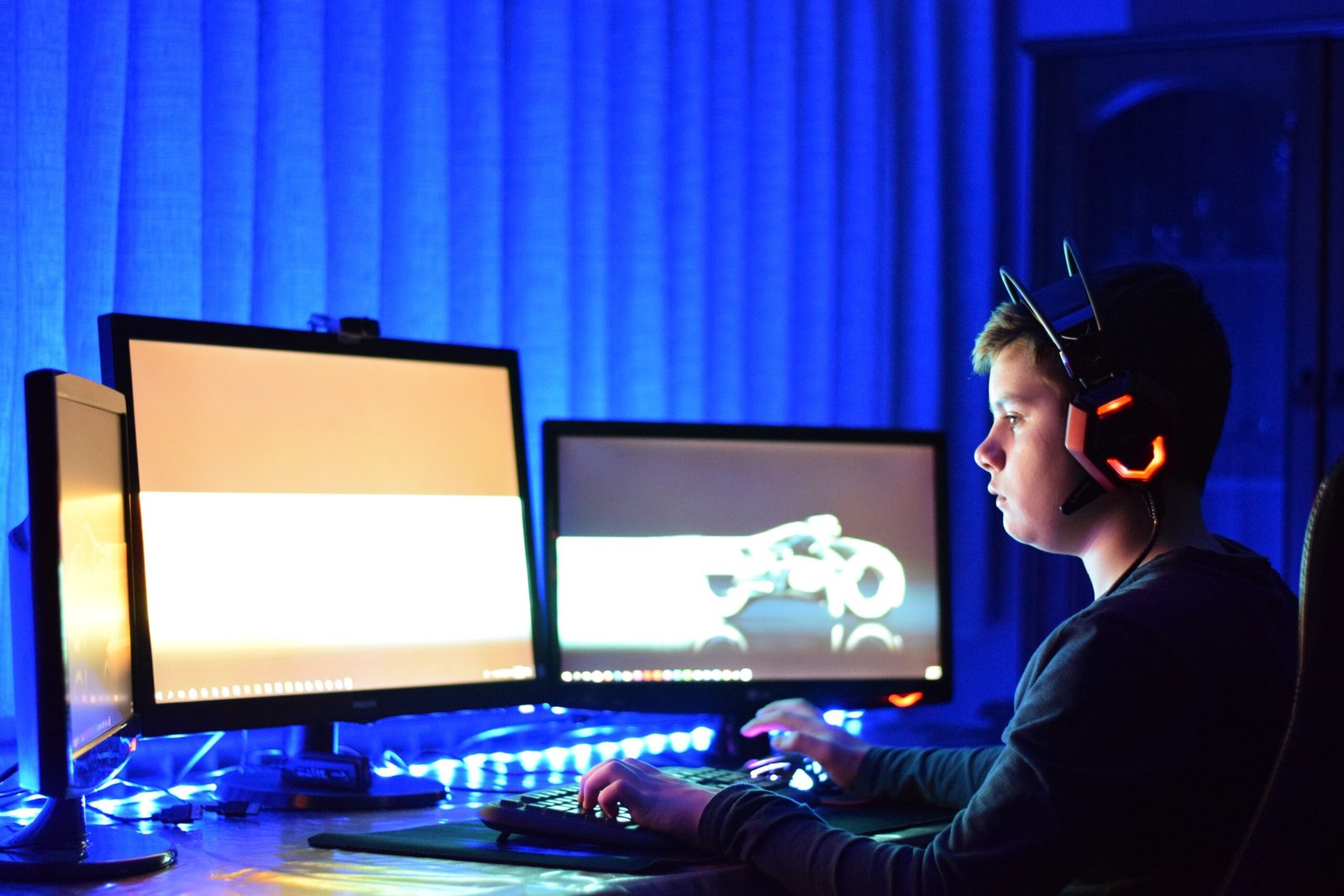
LCFTechMods gaming update by LyncConf is often linked with gaming improvements, mod settings, software updates, and hardware performance. PC players may use this type of information when a game runs slowly, freezes, stutters, or shows unstable frame rates.
Performance problems do not always require expensive hardware. Poor settings, outdated drivers, background programs, damaged files, or demanding modifications can reduce performance.
Players should diagnose the cause before changing everything. A careful process can produce smoother gameplay without damaging image quality.
This guide explains how updates, mods, settings, and hardware work together to affect PC gaming performance.
How PC Gaming Performance Works
A game uses several computer parts at the same time.
The processor handles game logic, artificial intelligence, physics, and background calculations. The graphics card creates the final image. Memory holds active information. Storage loads files. Cooling controls temperature.
A weak point in one area can limit the entire system.
Performance is often measured through:
- Frames per second
- Frame time consistency
- Loading speed
- Input response
- Visual stability
- Network delay
- System temperature
A high average frame rate can still feel poor when frame times change sharply.
LCFTechMods Gaming Update by LyncConf and Optimization
LCFTechMods gaming update by LyncConf may include advice about game settings, graphics drivers, verified mods, and technical updates.
The following table shows common performance problems and possible causes.
| Problem | Possible Cause | First Check |
| Low frame rate | High graphics settings | Lower shadows |
| Sudden stutter | Memory or storage activity | Close background programs |
| Long loading time | Slow storage | Check game drive |
| Visual glitches | Driver or mod conflict | Test without visual mods |
| Game crash | Damaged files or scripts | Verify game files |
| High temperature | Dust or weak cooling | Check airflow |
| Online delay | Network connection | Test connection stability |
| Input delay | Frame queue or display setting | Check frame limit |
Players should confirm the cause through testing.
Start With Official Updates
Official patches can improve performance by fixing memory leaks, improving shader systems, and reducing unnecessary calculations.
However, a new patch can also create temporary problems. Players should read patch notes and current user feedback.
Before updating, check:
- Whether the patch mentions performance
- Whether it affects the player’s hardware
- Whether mods support it
- Whether other players report crashes
- Whether the update changes graphics settings
- Whether a rollback option exists
Players should avoid installing unofficial replacement files from unknown pages.
Update Graphics Drivers Carefully
Graphics drivers allow the operating system and games to communicate with the graphics card.
New drivers may improve support for recent releases. They can also fix crashes or visual errors. However, the newest driver is not always the best choice for every older game.
A safe driver update includes:
- Downloading from the hardware manufacturer
- Closing games and editing software
- Recording current settings
- Creating a restore point
- Installing the correct model version
- Restarting the computer
- Testing several games
- Returning to the previous version if required
Third-party driver websites may provide incorrect or modified files.
Adjust Graphics Settings in the Right Order
Some settings have a much larger performance effect than others.
Players should usually test these settings first:
- Ray tracing
- Shadow quality
- Reflection quality
- Volumetric effects
- Render distance
- Crowd density
- Anti-aliasing
- Resolution scale
- Texture quality
- Screen-space effects
Texture quality mainly affects graphics memory. Lowering it may not improve performance when enough memory is available.
Resolution and ray tracing can heavily affect graphics card performance.
Use Upscaling Carefully
Modern games may include upscaling systems. These tools render the game at a lower internal resolution and reconstruct the image.
Upscaling can improve frame rates, but aggressive modes may reduce image clarity. The best setting depends on the screen resolution and target frame rate.
Players should compare:
- Native resolution
- Quality mode
- Balanced mode
- Performance mode
- Dynamic resolution
A quality mode often provides a good balance on higher-resolution displays.
Frame Generation and Input Response
Some games use frame generation to create additional visual frames. This can make motion look smoother, but it does not fully replace real rendered performance.
Frame generation may increase visible frame rate while adding some response delay. It works best when the base frame rate already feels stable.
Competitive players may prefer lower latency over a higher displayed number.
How Mods Affect Performance
Mods can improve or reduce performance.
Optimization mods may remove unnecessary objects, simplify effects, reduce texture size, or improve scripts. Visual mods may add high-resolution textures, advanced lighting, extra objects, or detailed weather.
Common demanding mod types include:
- Large texture packs
- Advanced lighting
- Dense vegetation
- High-detail character models
- Expanded draw distance
- Extra non-player characters
- Complex physics
- Script-heavy gameplay systems
Players should read hardware recommendations before installation.
Recognizing a Poor Optimization Mod
Not every file with “performance” in its title improves performance.
Look for:
Clear explanation: The creator should explain what the mod changes.
Measured testing: Results should include hardware details and consistent testing conditions.
Reversible installation: Users should be able to remove the mod safely.
Version support: The file should match the current game version.
Avoid mods that promise extreme frame rate increases without explaining any technical changes.
Monitor Hardware Use
Performance monitoring helps players identify the limiting component.
If graphics card use stays near full capacity, lower graphics settings or resolution. If processor use is high on a few cores, reduce settings linked with simulation, crowds, or draw distance.
High memory use can cause stuttering when the system begins moving data to storage. High graphics memory use can cause missing textures or sharp frame drops.
Temperature also matters. Hardware may reduce speed when it becomes too hot.
Improve Background Performance
Background programs can use processor time, memory, storage, and network bandwidth.
Before gaming, users may close:
- Unused browser tabs
- File syncing programs
- Large downloads
- Video editing tools
- Unneeded launchers
- Recording programs
- Automatic scanning tasks
Players should not disable necessary security or system services without understanding their purpose.
Storage and Loading Speed
Modern games often load large textures and map data while the player moves.
A faster solid-state drive can reduce loading time and some types of stutter. However, storage cannot solve every frame rate problem.
Players should maintain enough free space because a nearly full drive may perform poorly. They should also verify game files when an update produces missing content or crashes.
Cooling and Stable Performance
Heat can reduce performance during long sessions.
Players should keep air vents clear and remove dust carefully. Laptop users should place the device on a hard surface instead of a bed or cushion.
Common signs of heat problems include:
- Good performance at first
- Lower frame rates after several minutes
- Loud fans
- Sudden shutdowns
- High reported temperatures
Hardware changes and internal cleaning may require professional help.
Building a Balanced Settings Profile
A balanced profile should match the user’s hardware, display, and preferred game type.
Story-focused players may choose higher image quality at a stable lower frame rate. Competitive players may reduce visual settings for faster response. Laptop users may limit frame rates to reduce heat and battery use.
Users should save separate profiles when the game supports them.
Important FAQs
Can LCFTechMods information improve PC performance?
It can help users understand updates, mods, drivers, and settings. Results depend on the game and computer.
Should players always use the lowest graphics settings?
No. Players should lower the settings that have the greatest performance cost while keeping useful visual quality.
Do high-resolution texture mods reduce frame rates?
They mainly increase graphics memory use. Performance may fall when the card lacks enough memory.
Can driver updates cause crashes?
Yes. A new driver can create problems with specific games. Users may return to a stable earlier version.
Does more memory always increase frame rates?
Not always. More memory helps when the system does not have enough, but other parts may remain the main limit.
Is overclocking required for gaming improvement?
No. Settings, updates, cooling, and storage checks can improve the experience without overclocking.
Conclusion
LCFTechMods gaming update by LyncConf can guide PC players through game updates, driver changes, mod selection, and performance settings. Good optimization begins with identifying the actual problem instead of applying random fixes.
Players should update carefully, monitor hardware use, test settings one at a time, and install only verified mods. A balanced approach can provide smoother performance without removing every visual feature.